
Oat Market Outlook
- Tuesday November 27, 2006
This analysis featured in the November 27, 2006 issue of the HGCA's MI Prospects, Volume 9, Issue 11
Key points
- EU-25 oat output declined to 7.4Mt in 2006
- EU-25 2006/07 supply expected to be tight
- UK oat production recovered to 0.73Mt in 2006
- UK 2006/07 supply provides exportable surplus
- Oat market outlook favourable, but so is the outlook for other grains
This year's bigger UK oat crop has increased availability on domestic markets for 2006/07, while for the EU-25 as a whole another season of tight supply is anticipated.
2005-2006
It became evident in early 2005-06 that oat supplies, particularly in the UK, but also generally in the EU, were going to be tighter when compared to previous years. However, it was anticipated, that, as supplies of alternative feed grains were adequate, substitution in livestock feed markets would occur leaving adequate supplies available for milling.
Further, it might have been expected that EU subsidised exports from Sweden and Finland to long standing equine markets in the US south east would be restricted, adding to the availability of Scandinavian oats within the EU. Although almost 0.1Mt of oats under the special Swedish/Finnish export restitutions were granted in October 2005, further restitutions were limited and not much more than 25% of the 0.4Mt special Scandinavian oat export restitutions provision was used throughout 2005/06.
In the mid-1990's when Sweden and Finland joined the EU, the EU had a structural surplus of about 0.4Mt of oats per annum for which they negotiated special export rebate provision. At the time it was seen by the EU as more cost-effective means of providing market support for oats than extending market intervention programmes.
Oat prices in the UK advanced in the third quarter of 2005 but only to the degree that milling oats were selling at a premium to feed wheat and barley. In early spring, however, prices rose to unprecedented levels relative to other cereals, reflecting the EU-wide shortage of oats, with German oat prices (del Hamburg) rising to £130 to £140 /t. The UK dependence on imports from Scandinavia was substantially greater than had been anticipated earlier in the season. But, despite this disruptive situation, oat consumption by UK millers continued to increase, demonstrating the resilience of demand for oat products at this time. Official trade data put UK 2005/06 oat imports at about 50,000t, double the 2004/05 intake.
2006-2007
The higher prices in the late summer of 2005 appeared, however, sufficient to attract a 38% increase in area sown to UK winter oats. Defra's December 2005 Survey of Agriculture indicated an area of 87,000 ha which was similar to the area sown to winter oats in the autumn 2003. But despite the very sharp increase in prices in the spring, the expansion in spring oat sowing was limited to 18%, reportedly because of a shortage of seed oats. Total UK area sown to oats for the 2006 harvest was estimated by Defra at 0.12M ha, 32% above the 2005 level.
Defra's October estimate placed 2006 oat production at 0.726Mt, 36% above the 2005 crop (Graph 1). Fortunately the winter sown crop was advanced enough to avoid the impact of this summer's drought. UK oat production was less affected by the drought than that of most other European countries. This recovery in UK oat production, together with generally favourable reports of harvest quality, suggest that, other things being equal, supplies of milling oats should be more than adequate this year.
continue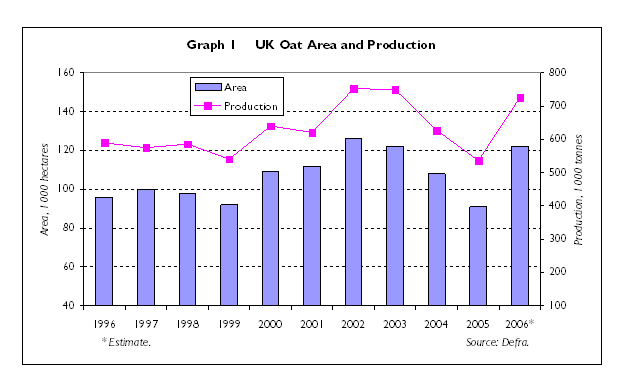 continued
In its September estimate of production Coceral estimated 2006 EU-25 oat production at 7.4Mt, 3% below 2005 output. The oat area was up less than 1%, despite the relatively favourable oat prices in spring. Yields were over 5% lower as a consequence of the summer drought. Production was lower in all the main oat producing member states except Spain and the UK (Graph 2). Spanish oat yields recovered from the drought-reduced levels of 2005.
continue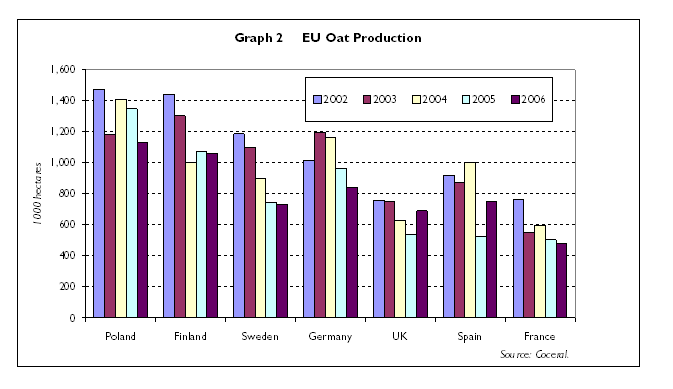 continued
Swedish and Finnish production this year was particularly disappointing, as it is the third successive year of below average oat output for these two countries that are normally the largest oat producers in Europe. Not only have yields been poor but plantings have been reduced as other crops and land use options under revised CAP policies have been more attractive to Scandinavian growers. In Sweden, in its second year of single farm payment, total arable area has been lower with area reverting to set-aside or livestock. In Finland, farmers have shown preference for barley because of the stability in prices stemming from the EU intervention programme.
Poland is now the largest oat producer in the EU but the availability and quality of Polish oats at this time are not such as they are likely to be a significant influence on milling oat prices. Generally throughout Europe, prospects for energy crops are expected to be favourable in the context of emerging bioethanol and biomass demand, generally competing with oats for land.
To date this season no export restitutions have been granted by the EU on Scandinavian oats and there have been next to no bids for restitutions. EU export licences up to mid-November 2006 indicate the export of 43,000t of oats, compared to 115,400t for the same period last season. This suggests a tight EU oat supply situation. Given this season's greater UK oat availability, prospects of UK oat exports appear to be favourable.
UK oat exports for July to September 2006 totalled 19,000t. This was better than last year's early season export progress, but was not exceptional. In recent years over half of all UK oat exports have been these early shipments of winter oats, which are not grown elsewhere in Europe. But evidence of the tight supply situation is that part of these exports were to Norway. Further Canadian oat shipments are being made to Norway. While the quantity of oats is not large and Norway is outside the EU, its proximity to Sweden has meant that in the past it has been something of a captive market for the Swedes.
Further Outlook
Growers' price expectations have been raised by the well publicised run-up in malting barley prices. Millers for their part are aware of the improved UK supply situation and reports indicate that they are interested in forward contracting to increase and secure portion of their needs, given the continued growth in demand for oat products. (Oat meal has a very favourable health image with consumers).
Market direction will be determined by export business or its absence, probably hinging in turn on whether German millers are able to source from Finland. However, looking at harvest 2007, there is more than the usual uncertainty with regards to oat supplies. The UK winter oat area is expected to have increased only slightly, as favourable market outlook for other crops also encourage higher wheat, barley and rapeseed plantings. The situation is similar elsewhere in the EU. If oat supplies increase to burdensome levels, it is only likely to result from a combination of a recovery in Scandinavian production and the decline in their US market.
David Walker 001 780 434 7615
top of page